


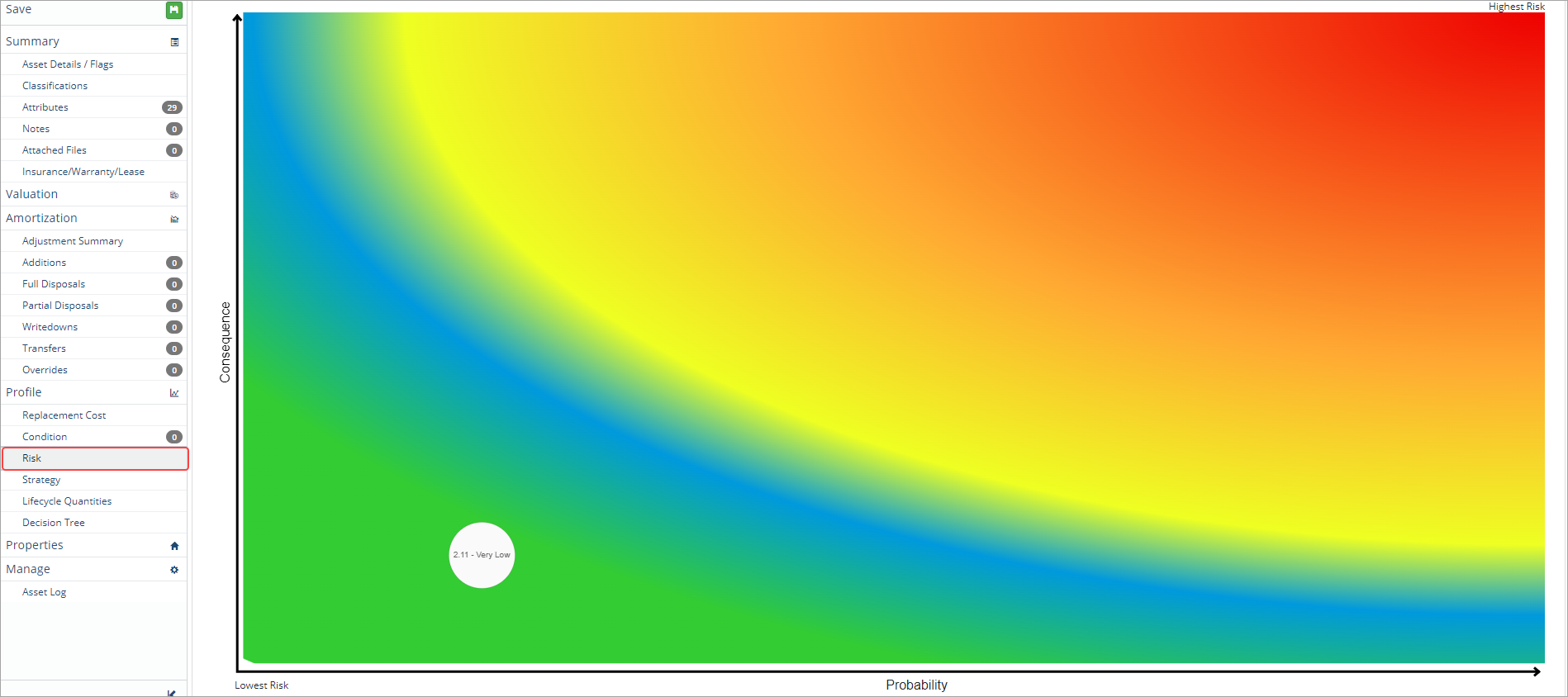
In asset management, risk is defined as the probability of failure multiplied by the consequence or impact should the asset fail. In Citywide, there are many ways to quantify probability and consequence and build risk models at the profile level which is then applied to assets within the Inventory. Asset risk information can be viewed at the asset level on the Risk screen.
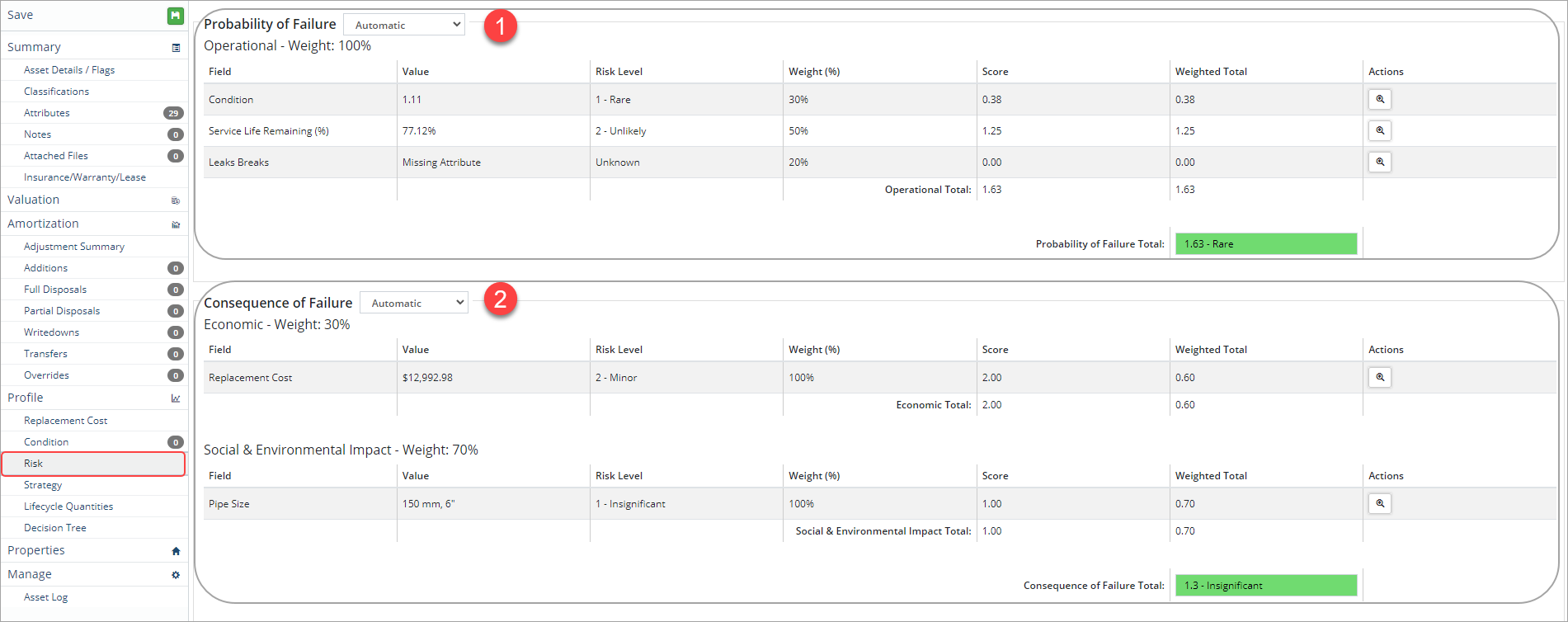
Probability of Failure typically relates to the current condition of the asset and uses metrics such as age and condition to determine when the asset might fail. Consequence of Failure measures the economic, social, operating, or environmental impact on the community should the asset fail. For example, a small diameter watermain break in a subdivision may cause a few customers to be without water service for a short time, whereas a large trunk watermain break outside a hospital could have disastrous effects.
By default, Citywide assigns each asset a risk rating using condition as the probability of failure and historical cost for consequence but the metrics can be changed and custom risk frameworks created to reflect the needs and priorities of the community. Click here for more information on creating a custom risk framework.
Manual Override


